Prima della leadership, impariamo a essere figli
Le soft skills invisibili che nascono dalle relazioni che ci hanno costruiti
Parliamo continuamente di leadership.
Di soft skills.
Di intelligenza emotiva.
Di capacità relazionali, comunicazione, ascolto, resilienza.
Le studiamo nelle università.
Le insegniamo nei programmi di higher education.
Le analizziamo nei contesti organizzativi e nei percorsi di humanistic leadership.
Eppure, raramente ci fermiamo a chiederci dove tutto questo inizi davvero.
Forse molto prima del lavoro.
Molto prima delle aule.
Forse nel primo luogo in cui impariamo a leggere il mondo:
la famiglia.
Forse la nostra prima educazione alla leadership non nasce dall’autorità.
Nasce dall’essere figli.
Le relazioni che ci precedono
Esistono famiglie che educano attraverso le parole.
Altre attraverso i silenzi.
Alcune attraverso la disciplina.
Altre attraverso l’accoglienza.
Nel tempo ho compreso che le relazioni che ci circondano nell’infanzia non costruiscono soltanto ricordi.
Costruiscono posture interiori.
Modi di stare nel mondo.
Modi di ascoltare.
Di reagire.
Di accogliere.
Di difendersi.
Di amare.
E forse molte delle competenze che oggi definiamo soft skills nascono esattamente lì, molto prima che impariamo a chiamarle così.
Mio padre e il senso della responsabilità pubblica
Sono cresciuta accanto a un padre socialista.
Un uomo impegnato nell’amministrazione della cosa pubblica.
E anche un avvocato.
Da bambina non comprendevo fino in fondo il significato politico delle conversazioni che attraversavano la nostra casa.
Ma ne percepivo il peso.
Le parole avevano conseguenze.
Le decisioni riguardavano sempre anche gli altri.
La responsabilità non era un concetto teorico.
Era un modo di abitare il mondo.
Credo di aver imparato lì una delle prime lezioni di leadership:
che guidare non significa occupare spazio.
Significa assumersi il peso delle proprie scelte.
E forse è anche per questo che oggi continuo a credere in una forma di leadership umanistica fondata non sul controllo, ma sulla responsabilità relazionale.
Mia madre e la pedagogia invisibile dell’accoglienza
Mia madre era profondamente cattolica.
Ma prima ancora aveva qualcosa di molto più raro:
la capacità di accogliere.
La nostra casa sembrava attraversata continuamente da persone, racconti, bisogni, fragilità.
E io osservavo.
Senza sapere che stavo apprendendo una delle competenze più difficili da sviluppare:
far sentire gli altri riconosciuti.
Non attraverso grandi gesti.
Ma attraverso la presenza.
L’ascolto.
L’attenzione.
Oggi la chiameremmo intelligenza emotiva.
Allora era semplicemente umanità quotidiana.
Una forma silenziosa di educazione relazionale.
Una pedagogia invisibile che mi ha insegnato che le persone non hanno bisogno soltanto di essere aiutate.
Hanno bisogno di sentirsi viste.
Il Sud del mondo e la profondità delle relazioni
Poi c’era Vieste.
La terra di mia madre.
Le onde maestrali.
Il vento.
Il Sud.
Ma non soltanto un Sud geografico.
Un Sud emotivo.
Culturale.
Umano.
Il Sud insegna qualcosa che nessuna teoria sulla leadership, sulle soft skills o sulla comunicazione riesce davvero a spiegare fino in fondo:
la profondità delle relazioni umane.
Le conversazioni lente.
Le case aperte.
La memoria.
La dignità anche dentro la fatica.
È lì che ho imparato che la resilienza non coincide con la durezza.
La vera resilienza resta umana.
Capace di sentire.
Capace di accogliere.
Capace di continuare ad amare senza diventare indifferente.
Prima delle competenze, impariamo la relazione
Oggi lavoriamo continuamente sulle competenze.
Misuriamo performance.
Costruiamo modelli.
Cerchiamo di insegnare leadership, comunicazione, adattabilità, pensiero critico.
E tutto questo è importante.
Ma più il tempo passa, più mi convinco che molte delle competenze più importanti nascano molto prima dei contesti professionali.
Nascono nei pranzi lunghi.
Nei conflitti familiari.
Nei silenzi.
Nelle differenze tra fratelli.
Nelle assenze.
Nel modo in cui abbiamo imparato — o non imparato — a sentirci ascoltati.
Essere figli significa attraversare continuamente esperienze di adattamento emotivo e relazionale.
Ed è forse una delle prime forme di educazione emotiva che sperimentiamo.
La leadership che non appare
Viviamo in una cultura che associa spesso la leadership alla visibilità.
Alla performance.
Alla capacità di convincere.
Ma alcune delle forme più profonde di leadership sono quasi invisibili.
Accadono:
-
nell’ascolto
-
nella cura
-
nella capacità di creare fiducia
-
nell’attenzione verso gli altri
-
nella possibilità di restare umani anche dentro la complessità
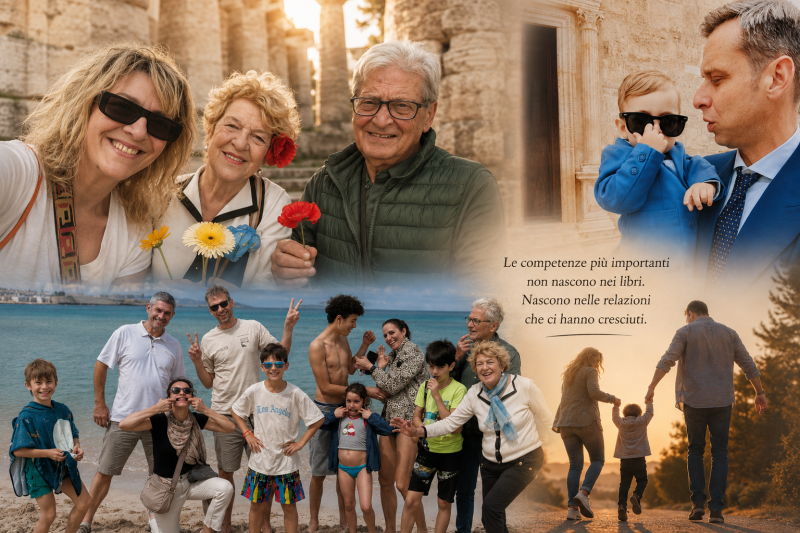
E forse molte di queste competenze non nascono nei manuali.
Nascono nelle relazioni che ci hanno cresciuti.
Le competenze più importanti restano profondamente umane
Oggi parliamo molto di innovazione, tecnologia e trasformazione.
E naturalmente tutto questo conta.
Ma credo sempre di più che il futuro apparterrà soprattutto a chi saprà restare umano.
A chi saprà ascoltare.
Comprendere.
Accogliere.
Creare connessioni autentiche.
Perché le competenze più importanti raramente sono soltanto tecniche.
Sono profondamente relazionali.
E forse iniziano molto prima della leadership.
Iniziano semplicemente dal fatto di essere stati figli.
Articoli correlati
→ Why Soft Skills Are Not Soft
Why Soft Skills Are Not Soft
→ What Motherhood Taught Me About Leadership
What Motherhood Taught Me About Leadership
→ Perché ascoltare sta diventando la soft skill più rivoluzionaria
Why Listening Is Becoming the Most Important Soft Skill
→ La Nuova Città delle Dame
La Nuova Città delle Dame
Valeria Caggiano
Professoressa Universitaria | Ricercatrice Internazionale | Humanistic Leadership
Ricerca, Educazione, Soft Skills e Trasformazione Human-Centered
Before Leadership, We Learn to Be Someone’s Child
The invisible soft skills born from the relationships that shaped us
We constantly speak about leadership.
About soft skills.
About emotional intelligence.
About communication, resilience, empathy, and relational awareness.
We study them in universities.
We teach them in higher education programs.
We analyze them in organizational contexts and within models of humanistic leadership.
And yet, we rarely stop to ask where all of this truly begins.
Perhaps long before work.
Long before classrooms.
Perhaps in the first place where we learn how to inhabit the world:
the family.
Perhaps our first education in leadership does not begin with authority.
It begins with being someone’s child.
The relationships that existed before us
Some families educate through words.
Others through silence.
Some through discipline.
Others through hospitality.
Over time, I have come to understand that the relationships surrounding us in childhood do not simply build memories.
They build inner postures.
Ways of existing in the world.
Ways of listening.
Of reacting.
Of welcoming.
Of protecting ourselves.
Of loving.
And perhaps many of the competencies we now call soft skills are born exactly there, long before we learn how to define them.
My father and the meaning of public responsibility
I grew up with a socialist father.
A man involved in public administration.
And also a lawyer.
As a child, I did not fully understand the political meaning of the conversations that crossed our home.
But I could feel their weight.
Words had consequences.
Decisions always involved other people.
Responsibility was not a theoretical concept.
It was a way of inhabiting the world.
I believe this is where I learned one of my earliest lessons about leadership:
that leading does not necessarily mean occupying space.
It means carrying the weight of one’s choices.
And perhaps this is why I still believe in a form of humanistic leadership grounded not in control, but in relational responsibility.
My mother and the invisible pedagogy of hospitality
My mother was deeply Catholic.
But before anything else, she possessed something much rarer:
the ability to welcome others.
Our home constantly seemed to be crossed by people, stories, needs, and vulnerabilities.
And I observed.
Without realizing that I was learning one of the most difficult human competencies to develop:
making others feel recognized.
Not through grand gestures.
But through presence.
Listening.
Attention.
Today we would call it emotional intelligence.
Back then, it was simply everyday humanity.
A silent form of relational education.
An invisible pedagogy that taught me that people do not only need help.
They need to feel seen.
The South of the world and the depth of human relationships
And then there was Vieste.
My mother’s homeland.
The maestrale winds.
The sea.
The South.
But not only a geographical South.
An emotional South.
A cultural South.
A deeply human South.
The South teaches something that no theory of leadership, soft skills, or communication can ever fully explain:
the depth of human relationships.
Long conversations.
Open homes.
Memory.
Dignity even within hardship.
It was there that I learned resilience is not hardness.
True resilience remains human.
Capable of feeling.
Capable of welcoming.
Capable of continuing to love without becoming indifferent.
Before competencies, we learn relationships
Today we constantly work on competencies.
We measure performance.
We build models.
We try to teach leadership, adaptability, communication, and critical thinking.
And all of this matters.
But the more time passes, the more convinced I become that many of the most important human competencies are formed long before professional contexts.
They emerge during long family lunches.
In conflicts.
In silences.
In the differences between siblings.
In absences.
In the ways we learned — or failed to learn — how to feel heard.
Being someone’s child means continuously navigating emotional and relational adaptation.
And perhaps it is one of the very first forms of emotional education we experience.
The leadership that remains invisible
We live in a culture that often associates leadership with visibility.
With performance.
With persuasion.
But some of the deepest forms of leadership are almost invisible.
They emerge:
-
through listening
-
through care
-
through the ability to create trust
-
through attention toward others
-
through the capacity to remain human even within complexity
And perhaps many of these competencies are not born from manuals.
They are born from the relationships that raised us.
The most important competencies remain profoundly human
Today we speak constantly about innovation, technology, and transformation.
And of course, all of this matters.
But I increasingly believe that the future will belong above all to those capable of remaining human.
To those capable of listening.
Understanding.
Welcoming.
Creating authentic connections.
Because the most important competencies are rarely only technical.
They are profoundly relational.
And perhaps they begin long before leadership itself.
Perhaps they begin simply with being someone’s child.
Related Articles
→ Why Soft Skills Are Not Soft
Why Soft Skills Are Not Soft
→ What Motherhood Taught Me About Leadership
What Motherhood Taught Me About Leadership
→ Why Listening Is Becoming the Most Important Soft Skill
Why Listening Is Becoming the Most Important Soft Skill
→ The New City of Ladies
The New City of Ladies
Valeria Caggiano
University Professor | International Researcher | Humanistic Leadership
Research, Education, Soft Skills & Human-Centered Transformation